
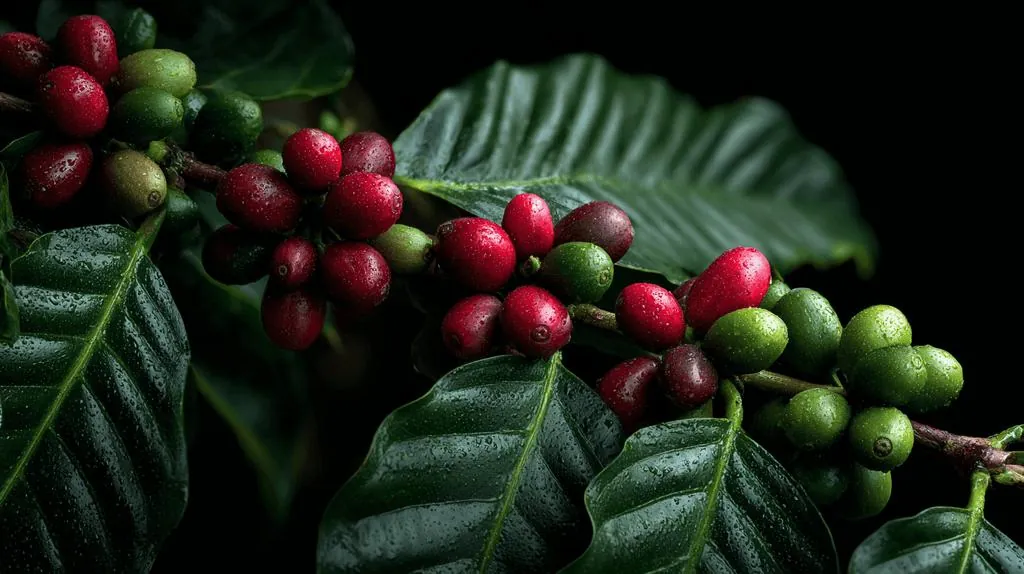
Pest & Disease Intelligence
Know the problem before you treat it.
Illustration · AI-generated
01Integrated Pest Management
Five steps, always in this order.
1
Identify
Identify the problem. A symptom or photograph alone is not always enough for diagnosis.
2
Monitor
Monitor its level through regular scouting and records.
3
Prevent
Prevent the conditions that favor it.
4
Conserve
Conserve beneficial organisms and natural enemies.
5
Treat only if justified
Use a registered pesticide only when monitoring justifies it.
02Diagnostic library
Ten profiles, by plant part.
Where is the problem?
Select part of the plant to see the profiles that affect it.
Fig. 2 · Schematic coffee plant, not to scale
10 profiles
 1.0×
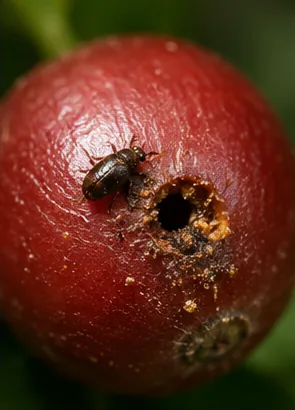
Hover or scroll to zoom · Illustration · AI-generated, not for identification Typical damage
Bores into coffee berries and damages beans.
Plant parts
berries
Prevention / management
Frequent, thorough harvesting; remove leftover and fallen berries; monitor traps; consider locally approved biological control such as Beauveria bassiana; use registered insecticides only under local guidance.
03Treatment framework
Cultural, biological, organic, chemical.
- 01
Cultural
Sanitation, pruning, appropriate shade, healthy nursery stock, balanced nutrition, drainage, and regular scouting.
- 02
Biological
Conserve natural enemies; use validated beneficial insects, predatory mites, parasitoids, or microbial agents where locally available and approved.
- 03
Organic-compatible
Examples may include neem-based products, insecticidal soaps, horticultural oils, microbial biopesticides, and certain copper products. Organic certification rules differ by market; verify product eligibility.
- 04
Chemical
Use only products registered for the crop, target pest or disease, and country. Follow the product label, personal protective equipment, re-entry interval, pre-harvest interval, environmental precautions, and resistance-management instructions.