
Coffee Farming Knowledge Center
A scientific library for the whole coffee plant.
Illustration · AI-generated
01Coffee anatomy
Inside a coffee cherry.
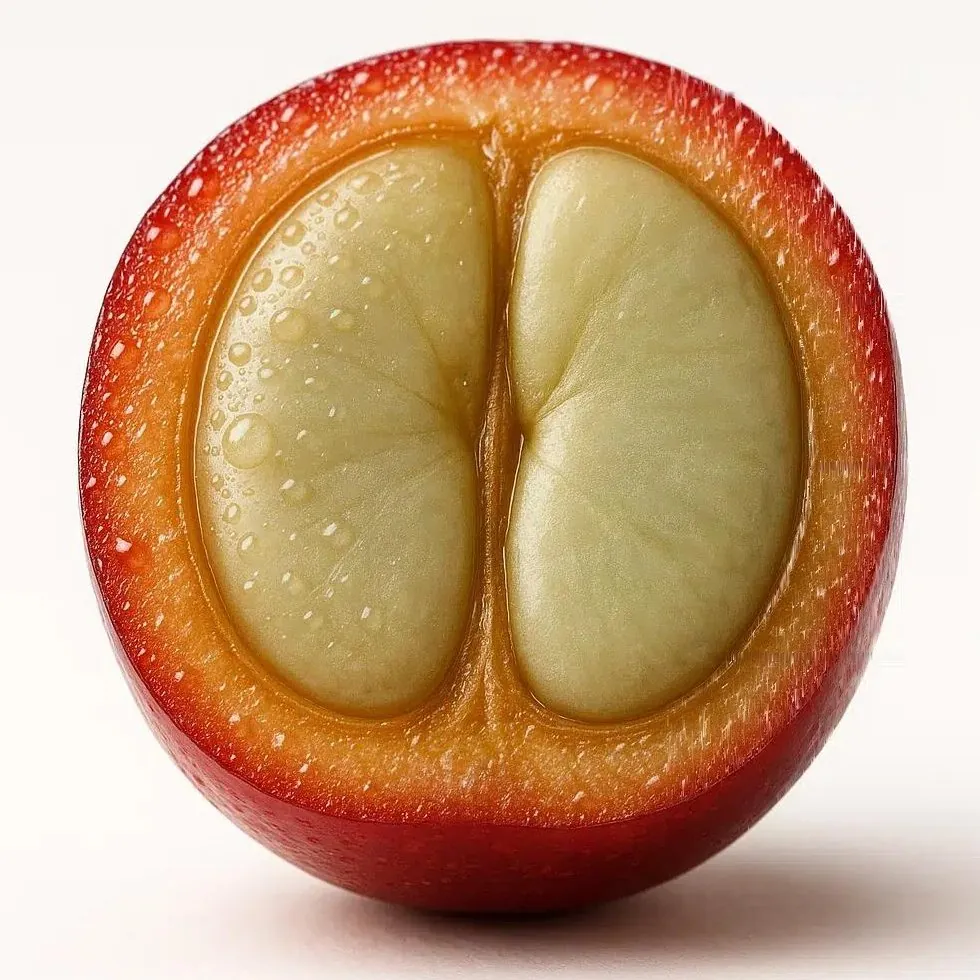
Illustration · AI-generated
Usually two seeds sit flat sides together, each covered by a fine silverskin. A cherry with a single round seed is called a peaberry.
02Plant growth
From flower to ripe cherry.
Stage 1
Flowering
Small, white, fragrant flowers open in clusters where the leaves meet the branch.
Stage 2
Green
Hard green cherries form and slowly fill over several months.
Stage 3
Turning
Colour begins to change as the fruit matures.
Stage 4
Ripe
Fully coloured cherries: the target for careful, selective picking.
Stage 5
Overripe
Darkening and drying. Leftover and fallen cherries can shelter the coffee berry borer.
03Guide library
Seventeen topics, four areas.
17 topics
Plant science
Coffee species
In preparationThe main cultivated species, Coffea arabica and Coffea canephora (Robusta), plus Liberica and others.
Coffee varieties
In preparationHow varieties differ in growth habit, disease resistance and cup character, and why choice depends on the site.
Coffee anatomy
In preparationRoots, stem, leaves, flowers and the layers of the cherry, from skin to seed.
Plant growth
In preparationFrom seed and seedling through flowering to fruit, and what each stage needs.
Cultivation
Site selection
In preparationElevation, temperature, rainfall, soil, drainage and slope. Elevation alone does not decide suitability.
Nursery practices
In preparationHealthy, traceable planting material and clean nursery stock.
Planting
In preparationPlanting layout, spacing, ground cover and early establishment.
Shade
In preparationShade design and agroforestry for plant health, soil and biodiversity.
Pruning
In preparationCanopy management for airflow, productivity and disease prevention.
Nutrition
In preparationBalanced nutrition based on soil testing rather than fixed recipes.
Sustainable farming
In preparationSoil conservation, biodiversity, water care and regenerative practices on coffee farms.
Agricultural science
In preparationHow field trials, soil analysis and plant pathology inform everyday farm decisions.
Harvest & quality
Harvesting
In preparationHarvest maturity, frequent and thorough picking, and sorting.
Processing and storage
In preparationProcessing method, drying controls, moisture measurement and storage hygiene.
Coffee quality
In preparationWhat shapes quality from farm to cup, and how it is evaluated.
Coffee & the world
Coffee history
In preparationHow coffee travelled from its origins to farms around the tropics, including the Philippines.
Global coffee production
In preparationWhere coffee is grown, by whom, and the pressures producing regions share.